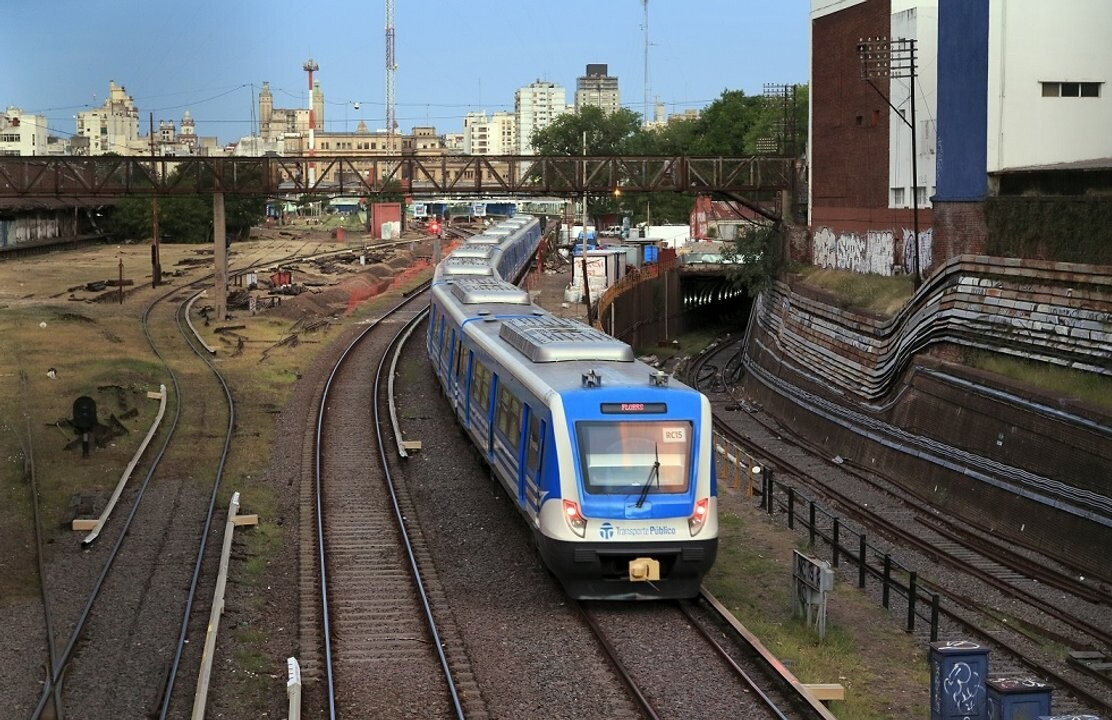
Buenos Aires, November 16 (NA) - Jorge Gómez, president of the 'Save the Train' civil association, denounced serious management and infrastructure deficiencies on the Sarmiento line that put passenger safety at risk. He criticized the purchase of trains that 'did not fit well on the tracks' and the urgent need for works such as signaling and the installation of a third rail for energy efficiency. Gómez also broke the scandal of the unfinished underground project, which cost hundreds of millions in commissions and was revealed as a poorly designed project with no escape route, contrasting this waste with the low cost of alternatives like a viaduct. Without those signals, it is 'a little difficult for the Sarmiento to run well,' and it is a work that should have been done years ago. Regarding the underground project, Gómez called it a 'scandal' of corruption. Another 420 million dollars were spent and the project is 'all stopped, deactivated.' The president of 'Save the Train' stated that this was a project where 'commissions were taken, about 5 billion dollars,' a amount with which 'we could have made 10 bridges' to replace the barriers. The underground project also had anomalies, such as sections where the train was '60 meters underground' without an escape route, which reflects 'permanent improvisation.' Therefore, the Sarmiento should have a viaduct, a work estimated at '500, 600 million dollars' and which was safer. SERIOUS: alert about train safety conditions Gómez also referred to the failure in the security system that recently affected a track apparatus on the Sarmiento, adding to incidents such as the crash on the San Martín line, where drivers had to circulate with a 'handwritten note' due to the failure of the alert systems. 'Upon the disappearance of that subsidy in private hands, the tariff would become unpayable, a factor that makes its sale unviable,' he stated. Finally, the expert stated that the proposal to privatize Ferrocarriles Argentinos is unviable, since the enormous initial investment required for security and the elimination of state subsidies would make the tariff unpayable for a private buyer. The root problem, according to Gómez, lies in the initial management decisions, as 'they should not have bought trains that did not fit well on the tracks.' The expert emphasized that it is crucial to carry out the signaling work, which is linked to the third rail, a system that gives the train the necessary energy. The tunnel boring machine, which cost 40 million euros, took longer to arrive than the time it was used, and only 7 km were built before the work was paralyzed. Since the purchase was made 'irresponsibly', the obligation was to adapt the tracks, because if they remain as they are, 'this will happen again'.